Automation in today’s fast-evolving world is far more than a technological improvement. It has become quite literally the driving force for changing the outlook of the contemporary workplaces. Automation is reorienting work, job type, and even needed worker skill sets in response to globalization, from the factory floor to the office.
Intelligent Automation Rises
Automation is nothing new, but it has come along in ways that are simply astounding over the past decade. Whereas machinery was first designed to perform repetitive tasks in industries such as manufacturing and logistics, now, with the addition of AI, robotics, and machine learning, it has grown so much more intelligent. Nowadays, automatic systems can analyze data, make decisions, and adapt to changing conditions-all with very little human input.
For instance, AI-driven customer service chatbots now handle millions of inquiries daily, while robotic systems perform complex surgeries with great precision. Automation has expanded from mechanical efficiency to cognitive capability and emerged as one of the most influential forces in today’s economy.

Redefining the Workplace
Automation generally affects more than just technology; it changes the whole structure of the workplace. Conventional jobs are revisited and replaced, as machines can carry out several tasks faster and more accurately without fatigue. Examples of such routine administrative jobs that get automated include scheduling, data entry, and payroll management, freeing employees to be more creative and strategic.
At the same time, automation has given rise to positions that did not exist a decade ago: data analysts, AI trainers, robotics engineers, and many more. Rather than taking jobs from humans, automation is shifting human involvement to tasks that require problem-solving, emotional intelligence, and innovation-skills that machines cannot yet replicate.
Improving Productivity and Efficiency
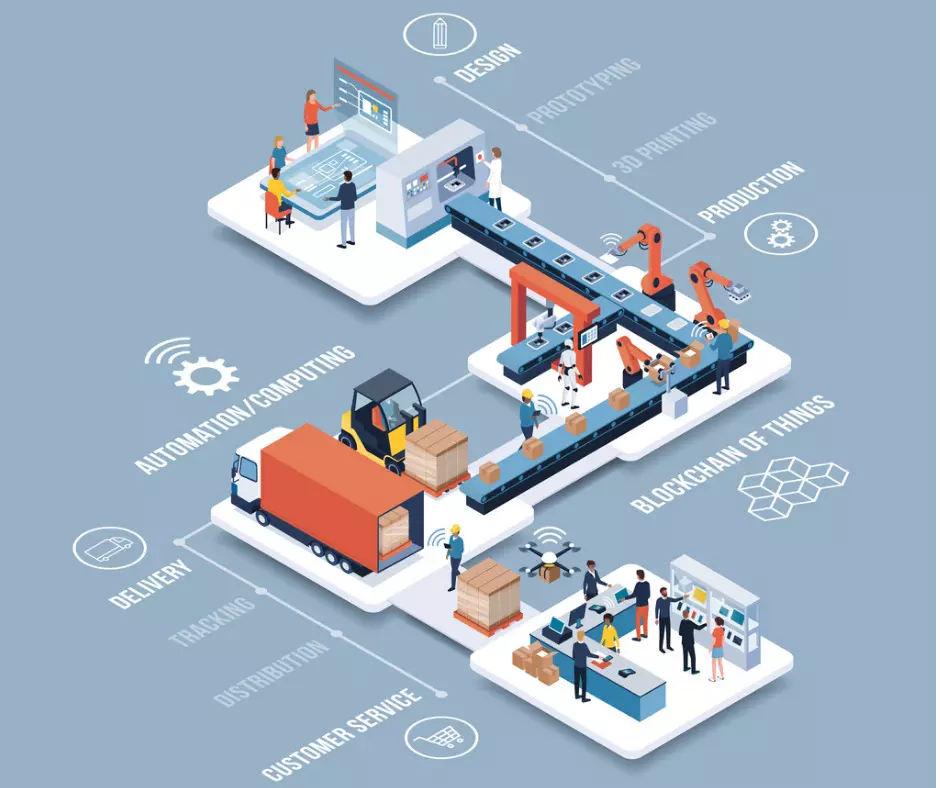
But with automation, one of the most significant benefits is that it increases productivity by minimizing human error. Such an automated system can work 24/7 without rest and perform tasks that in the past required several workers to do in almost a fraction of the time. Automation augments efficiency in manufacturing and logistics, reducing operational costs.
In fact, automation tools change the whole perception of productivity in the white-collar sectors. Automating reporting, content creation, and project management software frees up employees to address higher-order tasks. As such, companies can achieve quicker output with improved quality and greater consistency across operations.
Challenges and Adaptation
While there are remarkable advantages to automation, its challenges also exist. One such concern is job displacement. With machines doing the simple routine tasks, many are concerned that they might become obsolete. The truth is that history also proves that these technological revolutions produce far more jobs than they displace-just different in nature. Adaptation lies in upskilling and reskilling the workforce to meet the newly emerging demands.
This will be possible only through a change in workforce training-a collaboration by governments, businesses, and educational institutions. Furthermore, people need to become more digitally literate, capable of analyzing data, and thinking creatively if they are to outcompete automation in the workforce.
The Human Side of the Future
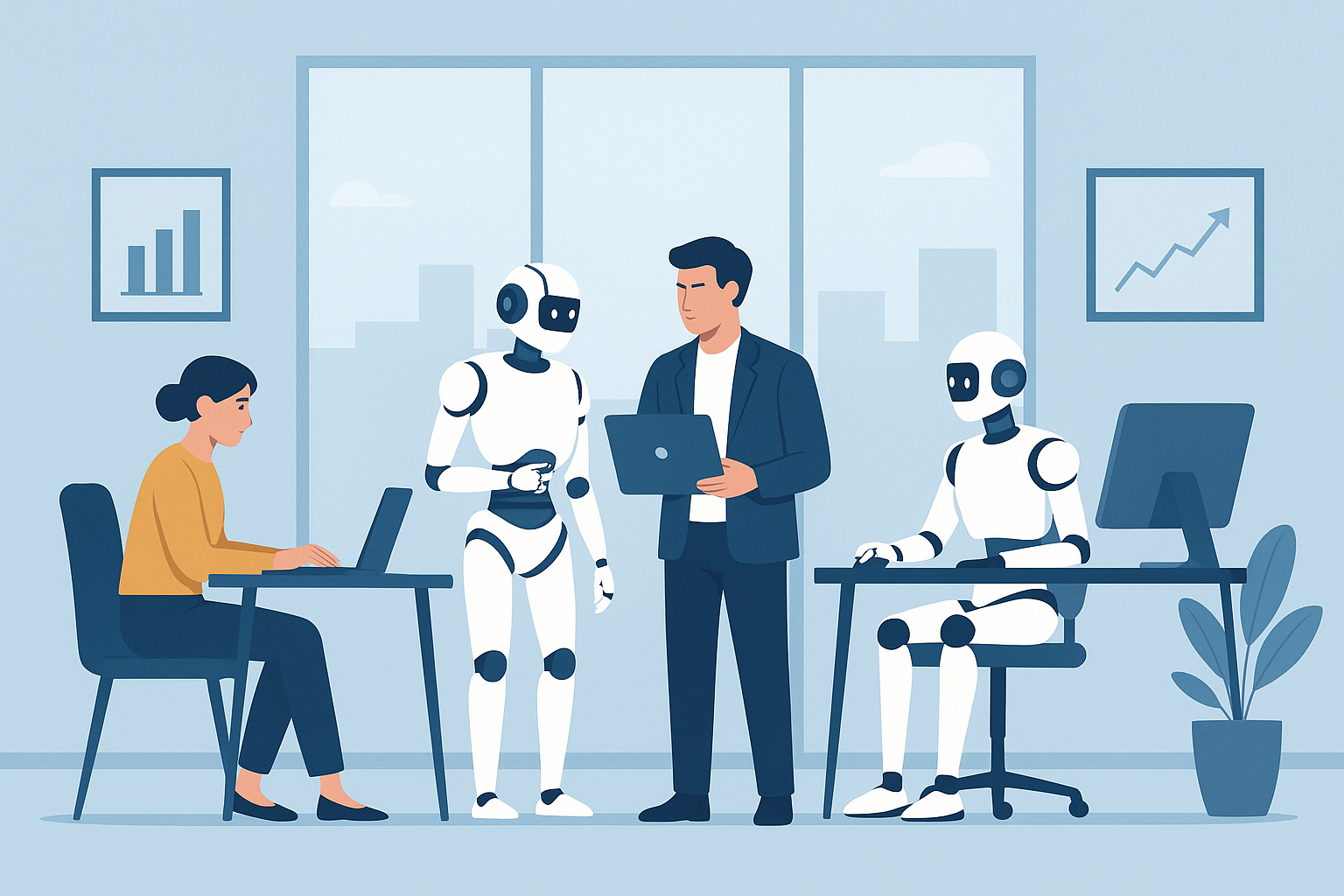
Ultimately, this future of work will not be about humans versus machines; it’s about collaboration between them. While automation can maintain precision, speed, and repetition, there are certain quintessential human resources like empathy, creativity, and strategic thinking.
The future workplace will most likely blend these strengths into hybrid environments where people and technology work hand in glove. As automation evolves, it promises to reshape industries and redefine what work means. For professionals, the goal is not to stand in the way of automation but to embrace it—learn to use it as a tool for growth, innovation, and better quality of life.